





HKUST Pioneers Computational Models for Transregional Neural Activity to Re-establish Damaged Neural Connectivity, Offering New Hope to Patients

Researchers at The Hong Kong University of Science and Technology (HKUST) School of Engineering have achieved a major breakthrough in computational neural engineering. They have developed a novel reinforcement learning-based generative model to predict neural signals, creating an artificial information pathway that effectively bypasses damaged brain areas. This groundbreaking research opens up new possibilities for neural rehabilitation in patients suffering from motor or cognitive impairments caused by conditions such as stroke or spinal cord injury. Their study, titled “A generative spike prediction model using behavioral reinforcement for re-establishing neural functional connectivity”, has been published in the prestigious journal Nature Computational Science.
Different regions of the brain encode and transmit information through electrical impulses between neurons, known as "neural spikes." When these neural transmission pathways are disrupted due to neurological diseases and injuries, it can result in severe functional impairments, such as memory disorder or paralysis.
A neural prosthesis creates an artificial information pathway to transmit information from upstream neural signals to downstream brain regions, bypassing damaged site and restoring lost motor or cognitive functions. The primary challenge lies in determining the effective pattern of downstream neural activity that can restore behavioral function, using upstream activities.
To address this, a research team, led by Prof. WANG Yiwen, Associate Professor of the Department of Electronic and Computer Engineering at HKUST, has introduced a reinforcement learning-based transregional neural spike prediction model. Unlike conventional methods, this approach does not rely on spike recordings from downstream brain areas to assess the functional integrity of neural pathways, which are often unavailable in patients with damaged pathways. Instead, it utilizes behavioral success as a feedback signal to guide model training. The model learns to transform spiking activities from active upstream neurons into real-time predictions for downstream neurons, facilitating biomimetic communication between disconnected brain regions.
“The core idea is to enable the model to learn the transregional mapping through trial-and-error, much like how the brain itself learns,” explained Prof. Wang. "This approach allows us to construct an ‘information bypass’ for patients with impaired neural pathways, thereby re-establishing functional connectivity.”
The team validated the proposed method by collecting motor control pathways data through behavioral experiments involving rats at HKUST’s Computational Cognitive Engineering Lab. The results showed that the model-generated spike signals can drive desired behaviors through a decoder, achieving significantly higher behavioral success rates than traditional methods. Moreover, the encoding properties of the generated signals closely resemble the biological modulation patterns observed in healthy neural recordings.
The method demonstrates excellent adaptability, maintaining high performance across different decoder settings and enabling rapid adaptation to new subjects with minimal calibration. This significantly enhances its potential for future clinical translation.
Prof. Wang added, “This approach not only provides new avenues for motor rehabilitation for patients with functional impairments due to neural damage, but also holds promise for optimal rehabilitation treatment for those with advanced cognitive function injuries. We will further explore the integration of this computational framework with neural modulation technologies and collaborate with clinical institutions to advance its practical application.”
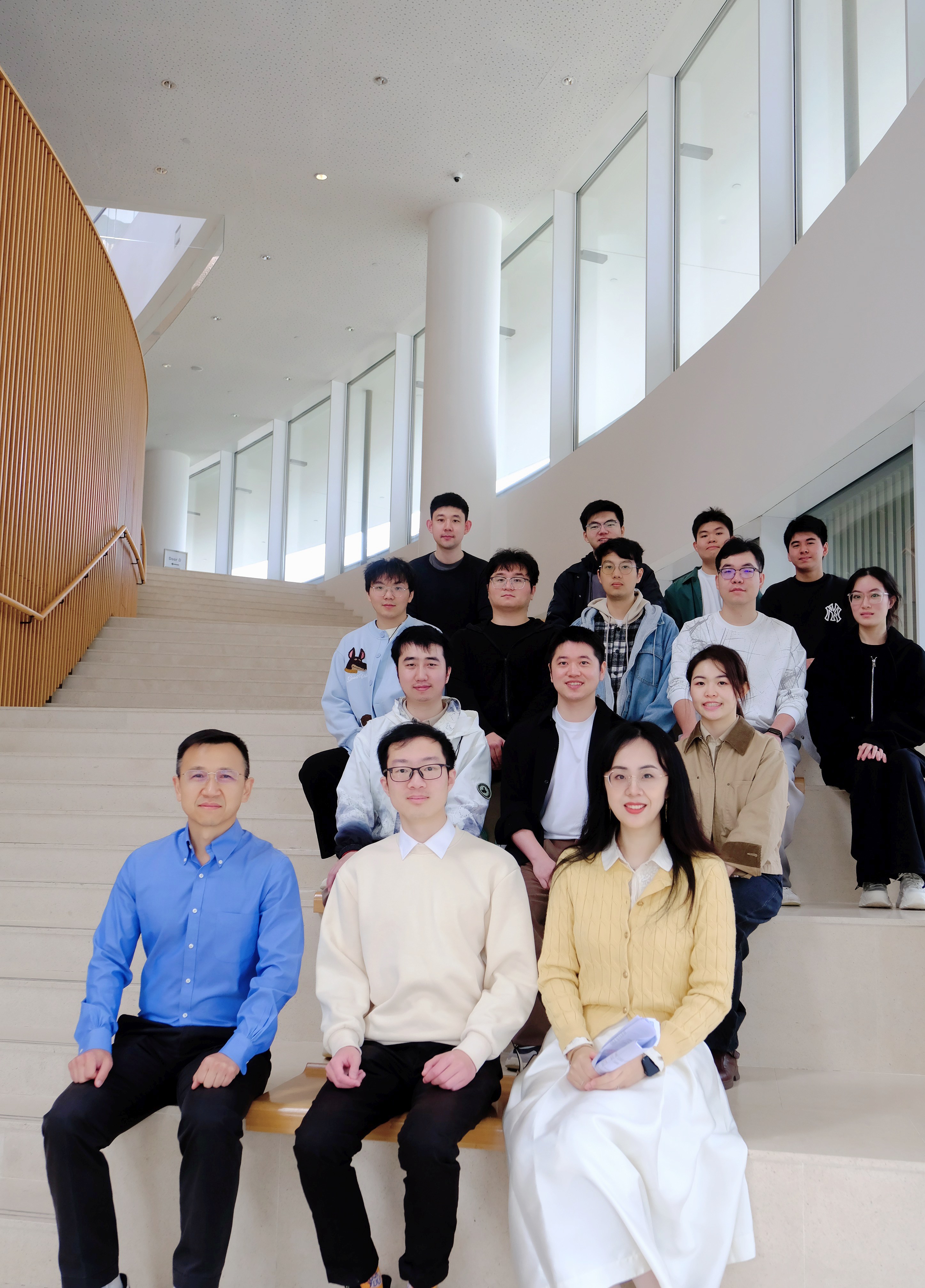
Prof. Wang is the corresponding author of the study, while Dr. WU Shenghui, Research Assistant Professor of the HKUST Department of Electronic and Computer Engineering, is the first author. Research collaborators include Prof. LIU Kai, Professor of HKUST Division of Life Science and the Department of Chemical and Biological Engineering, and Director of SIAT-HKUST Joint Laboratory for Brain Science; Prof. Dario FARINA, Professor of the Department of Bioengineering at Imperial College London; and Prof. José C. PRĺNCIPE, Distinguished Professor of the Department of Electrical and Computer Engineering at the University of Florida.
Sign Up for Our Latest News
Latest News
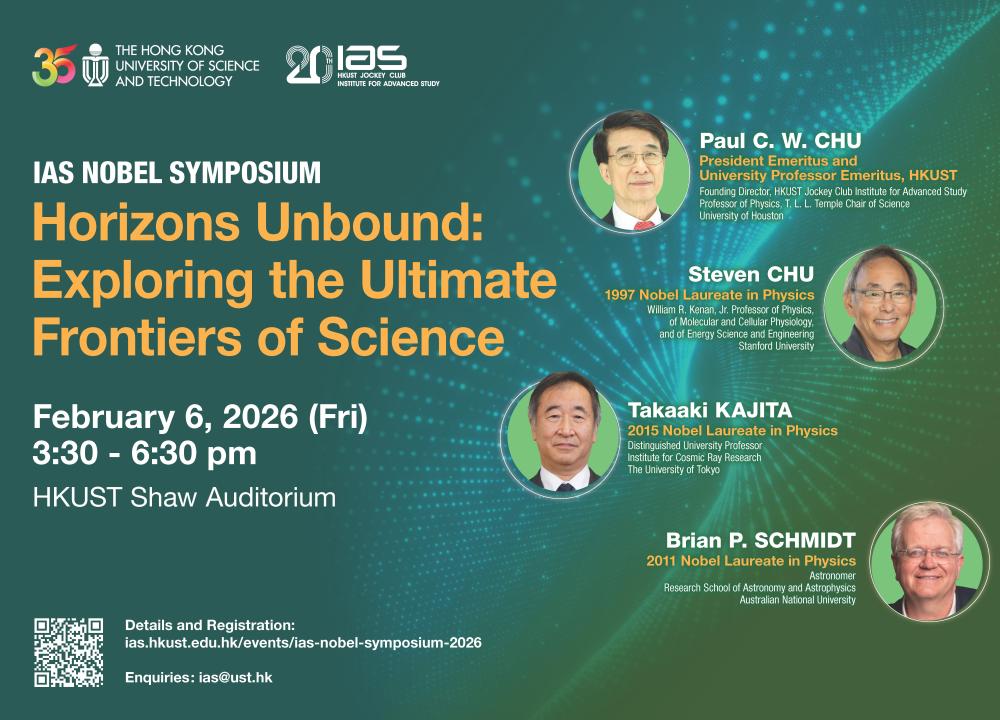
The Hong Kong University of Science and Technology (HKUST) Jockey Club Institute for Advanced Study will host a Nobel Symposium on February 6, 2026 (Friday), featuring three Nobel Laureates in Physics, along with Prof. Paul C. W. CHU, HKUST President Emeritus and University Professor Emeritus, who is a physicist pioneering in high-temperature superconductivity.
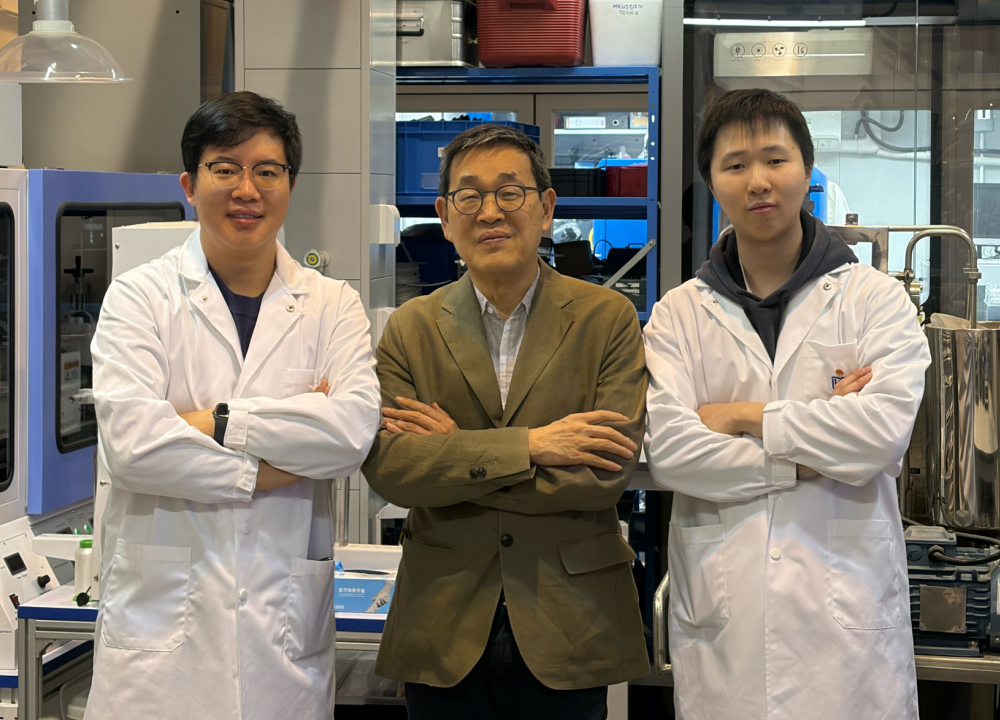
The Hong Kong University of Science and Technology (HKUST) research team has developed a groundbreaking wastewater treatment technology that integrates a mesh bioreactor with an ultrasound-induced transient cavitation cleaning mechanism. The system can complete mesh cleaning within 3.8 seconds under anaerobic conditions and achieves 10-20 times higher flux than conventional membrane bioreactors (MBRs).
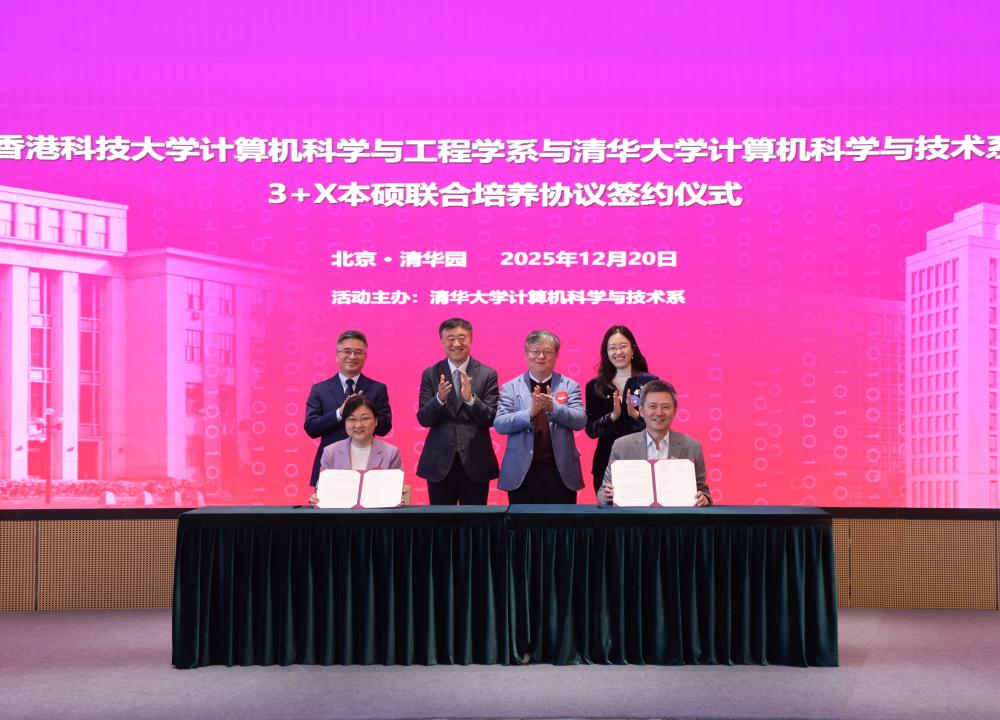
The Department of Computer Science and Engineering (CSE) at The Hong Kong University of Science and Technology (HKUST) and the Department of Computer Science and Technology at Tsinghua University (Tsinghua) announced the launch of a pioneering "3+1+X" Joint Undergraduate – Postgraduate Training Program, set to begin in the 2026/27 academic year.